From Startup Express to First Pilot: An International Founder Building in Finland
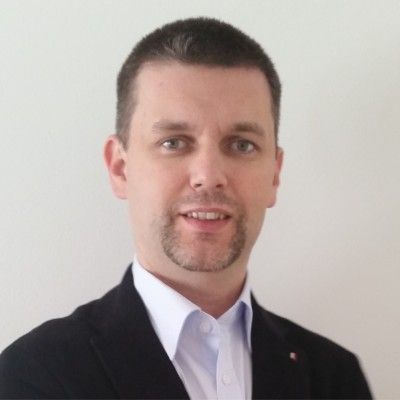
One of Finland's quiet strengths is how many of its founders arrived from somewhere else. On the Trusted Cofounder podcast, Victor Kuwandira traced a path from a farm outside Harare, to a software-engineering degree in Shanghai, to a master's in Finland and the Startup Express accelerator. He is now building Inzwa, an AI widget that recovers the customers e-commerce stores lose between the ad click and checkout. Three lessons for international founders building here.
If you arrived from somewhere else too and are looking for a team here, the practical guide is new to Finland and looking for a cofounder. Victor's story is what that path looks like from the inside.
1. Use the accelerator to unlearn, not just to learn
Victor is an engineer by training, and his most useful takeaway from Startup Express was learning to resist the instinct to build first. The program was a deliberate exercise in the business side: talking to customers before writing code, validating demand before committing months of engineering. For a technical international founder, an accelerator is less about the curriculum and more about rewiring the default reflex.
2. Capture explicit demand, not just implicit signals
Inzwa's whole thesis is a critique of how most analytics work. As Victor put it:
What we have in terms of analytics tools, it's all implicit data, like those heat maps. They can show you that 10 customers moved from here to there, but not why.
Inzwa watches digital body language, a zero-result search, an out-of-stock variant, a dense spec page, and triggers a small non-blocking nudge at the moment of friction. The point is to capture what the customer actually wanted and why they did or did not convert. The same lesson applies to your own product: implicit metrics tell you what happened, but only direct contact tells you why.
3. Start with five customers, not five hundred
Victor is deliberately opening Inzwa to a tiny closed beta of high-friction storefronts. His framing:
Inzwa can only serve merchants as a byproduct of serving their customers really well.
The only way to validate that is to live with a handful of stores long enough to understand their typical customer. Narrow beta, deep understanding, then expand. It is the opposite of chasing logos early.
The founder takeaway
Victor's network in Finland started near zero and grew through output: the accelerator, the first pilot merchant onboarded an hour before we recorded, the slow build of relationships. That is the same reality every international founder faces here, and it is exactly why verified, contribution-based matching matters more than network size. If you are building in Finland without a built-in network, read the international student guide to Finland's startup ecosystem or browse founders in the directory.
Listen to the full conversation with Victor: Decoding digital body language in e-commerce.
Related reading
You built the MVP, now you need someone to sell it: finding a business or sales cofounder in Finland
A working product and nobody to take it to market is the most common position in the Finnish directory. What a business cofounder actually does, whether you need one yet, where the commercial people are, how to evaluate one without a GitHub, and how to write the ask.
How to find a cofounder in Finland in 2026: every channel that works, ranked
Where Finnish founders actually find their cofounders, ranked by how often each channel produces one: the public directory, post-programme networks, universities, Slush, LinkedIn posts and global platforms. With the live pool, what to write before you look, and what to expect from the first message.
New to Finland and building a startup: how to find a Finnish cofounder when you have no network here
You moved to Finland, you are building something, and the people who could build it with you are all in another country. Here is how Finnish founders actually network, which institutions help internationals, and how to find a cofounder here.